 By Rebecca Chambers
Public relations is often shunned in the media as flacks, spin control, and unethical yes men. This is disgruntling to even the most weathered of professionals in our business, and after reading this book, I have to say I can see why the world may view our profession as a little dubious.
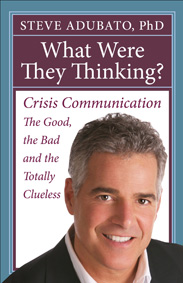
In Steve Adubato’s book, What Were They Thinking?: Crisis Communication: The Good, the Bad, and the Totally Clueless, the author took 22 of the most well-known crises of all time and examined where each one went right, which went wrong, and what lessons we can learn from them. In this blog, I will examine three crises from the book that particularly intrigued me.
The first crisis that interested me happened to be in the first chapter: the Johnson & Johnson Tylenol crisis. Adubato candidly admits that Johnson & Johnson was one of the only corporations to ever “get it right” in reacting to a crisis. Johnson & Johnson owned up to their mistakes and complied with every safety measure the media asked of them. Adubato wrote, “When mistakes or misstatements occur, own up to them…doing so increases your credibility and reputation as a ‘straight shooter’ who can be trusted.” Tylenol remained strong on the pain relief market shortly afterward, so they really did “get it right.”
The next interesting crisis was the infamous Exxon Valdez Oil Tanker Spill, which is in itself a hard lesson that PR students learn early in their classes. Exxon CEO Lawrence G. Rawl tried to bury his head in the sand and hope the crisis would go away, and he was rudely awakened when it did not. Adubato had this lesson to learn from Rawl: public relations fallout can be avoided with a simple, well-timed and sincere response from the head of the company. This may seem like common knowledge to you or me, but this situation just goes to show that even the most competent of people can be led astray – to devastating consequences.
Chapter 15 brought to my attention a crisis that I had never really paid much attention to – the stranding of JetBlue Airways passengers. At one time, JetBlue had NINE planes stranded on the runway for more than six hours – and passengers were given no food, water, or apologies. JetBlue did not issue public apologies until almost a week after the event, which in addition to the poor customer service on the tarmac hurt the airline badly. Their promise “To continue to bring humanity back to air travel” suffered during this time, and Adubato called the whole thing an “absolute disaster.”
All in all, I have always believed things truly got fun in public relations when something goes wrong, but from reading this book, I can see that ethics and a crucial decision-making process on the part of the public relations professional can truly make or break your crisis.


